
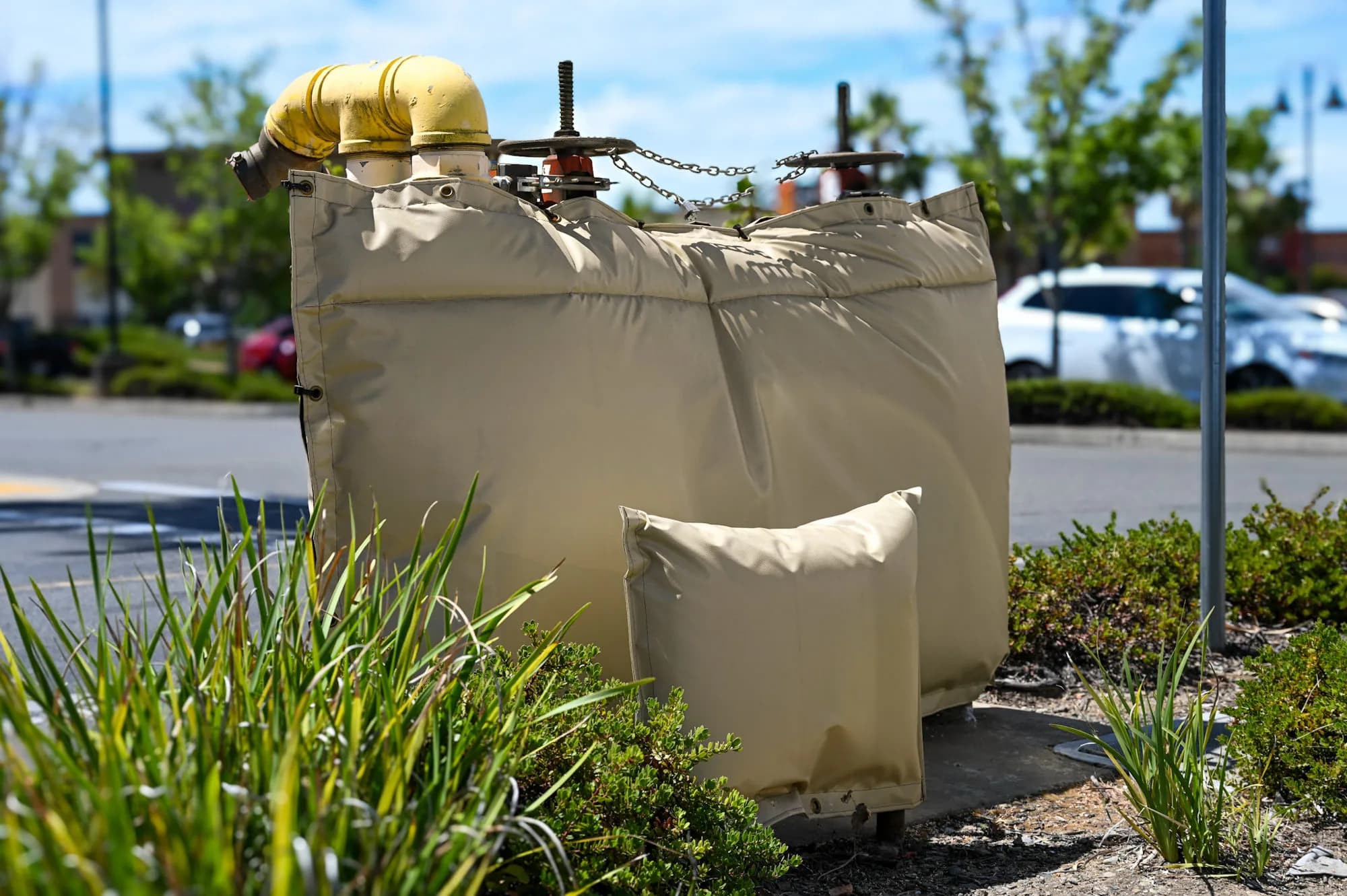
What an RPDA is
A reduced pressure detector assembly is an RP built for fire service: a mainline reduced pressure assembly with a small metered bypass beside it, so any water use through the fire line, including theft or a leak, registers on the meter. Where the water system rates the fire line a high hazard (antifreeze loops, chemical additives, non-potable sources), the RPDA is required instead of the DCDA.
The assemblies you will see: Watts 957RPDA and 994RPDA, Ames Colt C500, 5000SS, and Maxim LFM500, Zurn Wilkins 375DA / 375ASTDA, Apollo RPDALF4A (4ALF-700), and Deringer 50. All 2½" through 10" except the Deringer, which starts at 2". Each is in the cover finder with its published envelope.
What matters for the cover
Two things hang off the mainline. The bypass and meter sit alongside it, adding 4" of width on a Colt and up to 27" of total width on an Apollo 4ALF-700. The relief valve hangs below: 6½" on a Colt C500 at 2½", 21" on the largest Apollo. The cover has to clear the first and drain around the second.
The relief valve must drain. Set the cover so the base closes to the pad around the assembly but never seals under the relief port. On an RPDA the bypass RP has its own small relief valve too.
Photos first, every time. The stock open-top covers are sized to the mainline; whether the bypass sits inside them depends on the make and the size. Send a photo showing the bypass side and we will confirm the stock SKU or cut a custom pattern in 3–5 business days.
It cannot be drained. A fire line stays charged all winter. An insulated cover slows heat loss; it does not add heat. In a mild-winter market with the assembly on a flowing service it is often enough. In sustained cold, or where the fire authority requires the assembly held at 40°F, the answer is heat trace under the cover or a heated enclosure. Our fire-line freeze protection guide walks through that decision with the NFPA references.
Who buys RPDA covers
Fire protection distributors and the sprinkler contractors they serve, almost exclusively. The volume is 4" and 6", lumpy, and urgent: the customer who calls has a fire marshal's letter in hand. Keep the 85 × 40 and 100 × 50 on the shelf and quote the rest.
Sub Zero Covers sells through distributors only. Sizing questions start at the fitment hub; stocking questions go to the distributor program.