
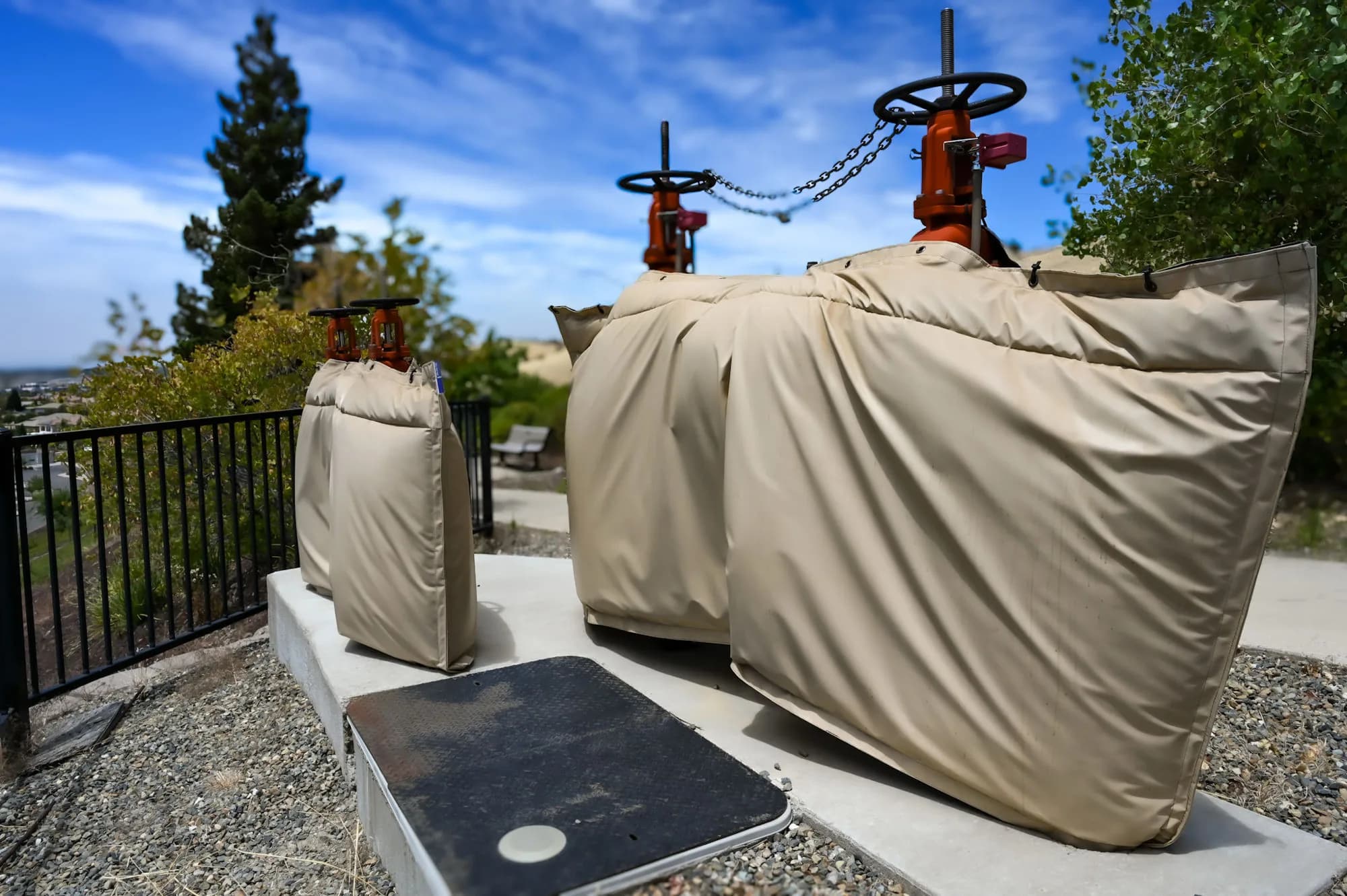
Reduced pressure zone assemblies — RP or RPZ depending on who you ask — are the workhorse of commercial backflow protection. Irrigation pumps, domestic water entries, and plenty of fire service setups run RPs because they provide the highest level of protection in a serviceable package.
They are also the hardest covers to get right with a universal sleeve.
Why RP covers are different
An RP is taller than a DC or PVB. The relief valve bonnet adds height. Test cocks sit in predictable but brand-specific locations. A cover that is too short compresses the relief mechanism. Too narrow and your installer cannot get the insulation seated around the shutoff valves. Too long and the drawcord flaps in the wind until it shreds.
We pattern each cover around the exact model dimensions — not a generic "large RP" bucket. That is why our top movers are model-specific SKUs like the Watts 007M1QT cover and the larger Watts 009M2QT.
Brands we see on RP jobs
Your yard probably has a favorite brand. We cover all of them:
- Watts — 007, 009, 909, 957, LF909 series and more
- Febco — 825Y, 860, 870 RP configurations
- Wilkins — 975XL2 and related RP sizes
- Ames — 2000SS and 4000SS series
- Apollo / Conbraco — RP4A and 40-200 line
If the tag says RP, start with the brand page and drill to the model. Our fitment hub links the full tree.
Counter tips for RP sizing calls
When a contractor reads you the model number, confirm orientation — vertical is standard but horizontal installs happen on pad-mounted setups. Ask if there is a strapped post or wall mount; clearance matters for height measurement.
For backflow testers quoting winterization work, pairing the correct RP cover with the test saves a callback. Testers who stock covers reduce "can you grab one while you are here?" friction.
Distributor stocking guidance
Most distributors open with two or three Watts RP SKUs that match local water district preferences, then add Febco or Wilkins equivalents for accounts that spec those brands. Fire protection distributors often add DCDA covers alongside RP inventory for combined commercial accounts.
Ready to add RP covers to your line card? See the distributor program for tier pricing and portal access.
Returns cost more than a second SKU
When a contractor forces the wrong RP cover onto an assembly, the relief bonnet binds, insulation compresses wrong, and your counter hears about it after the first hard freeze. Stocking model-specific patterns — not three sizes of universal vinyl — is how distributors keep winterization attach rate high and return rate low. One extra case of 009M2QT covers on the shelf beats a week of credit memos in January.