
The state layer
Florida's Department of Environmental Protection requires each community water system to run a cross-connection control program under F.A.C. 62-555.360, which points installation to AWWA Manual M14 and leaves freeze protection to the utility. The Florida Building Code, Plumbing (8th edition, 2023) adopts the 2021 International Plumbing Code with state amendments, so outdoor enclosures comply with ASSE 1060 (608.15.1) and assemblies in areas subject to freezing are removable by unions or protected from freezing by heat, insulation or both (608.15.2). Whether a Florida location is "subject to freezing" is a question the utility and the inspector answer differently in Miami and in Tallahassee.
What the utilities add
Palm Beach County Water Utilities' Chapter 7 (Cross-Connection/Backflow Prevention) is typical of South Florida: it puts the assembly on the customer's side of the point of service, requires access for testing, defers installation details to the department's design standards and the Florida Building Code, and says nothing about freezing. Gainesville Regional Utilities' cross-connection manual requires all assemblies above ground, allowing only a double check in a drained vault; a 2008 retrofit project in Gainesville moved fifteen flooded vault assemblies into above-ground enclosures. Panama City and other north Florida utilities send a seasonal notice each winter telling customers to insulate assemblies with foam wrap, insulation bags, or boxes.
The Florida pattern
North Florida and the Panhandle freeze most winters and hard some winters: the January 21–25, 2025 storm put 1.9 inches of snow on Tallahassee, a 13°F morning on Pensacola, and several nights in the upper teens and low 20s across the region. Central Florida freezes a few nights a year. South Florida almost never. Assemblies statewide are above grade, mostly on irrigation and commercial domestic service, and most are on ¾" to 2" RPs and DCs.
What this means for a cover
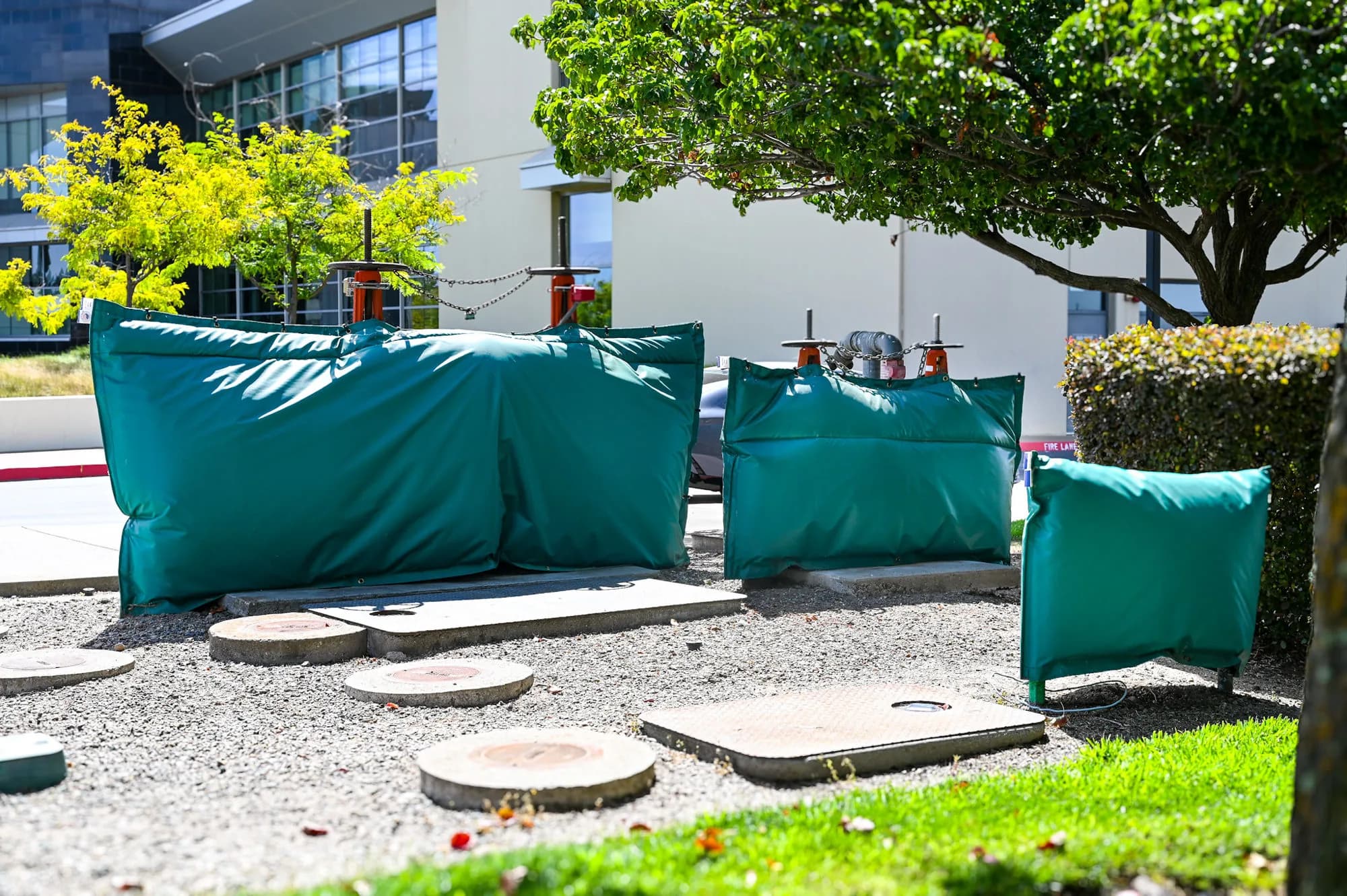
- North Florida and the Panhandle: an insulated cover on every outdoor assembly through winter, drained irrigation before an event. Insulation is a code-named method and the utilities' own alerts recommend it.
- Central Florida: covers on assemblies that matter, on for the forecast nights.
- South Florida: no freeze case. Covers sell as sun and theft protection if at all.
- Fire lines coming out of vaults: DCDA and RPDA above ground; the cover is the insulation layer in the northern half of the state.
Market notes
Florida is one of the largest irrigation markets in the country, nearly all of it on above-grade assemblies. Irrigation supply branches north of Orlando stock covers by the case; plumbing houses and backflow testers carry the commercial side. Both order through the distributor program. Georgia's stricter rules are on the Georgia page.
The counter version
North of Orlando, treat every outdoor assembly the way Georgia does: covered by November, drained before a multi-day event, and photographed for the file. South of Orlando, sell the cover for sun and theft if the customer wants it, and do not oversell the freeze case.