
The state layer
The North Carolina State Plumbing Code is based on the IPC. The 2018 NC code, built on the 2015 IPC, is still the enforced edition (the 2024 code is adopted with its effective date pending), so the two familiar provisions apply: outdoor enclosures must comply with ASSE 1060 (§608.14.1), and assemblies in freezing areas must be removable by unions or protected from freezing by heat, insulation or both (§608.14.2). The state's cross-connection rules leave installation standards to the water systems, and North Carolina's systems have written detailed ones.
What the utilities add
Fayetteville Public Works Commission requires RPs installed above ground, protected from freezing, a minimum of 12 inches above the ground and no higher than four feet, and states that an above-ground enclosure that covers the backflow preventer is required.
Charlotte Water's Design Manual (Chapter 14, Cross Connection / Backflow Prevention, January 2026) requires a protective structure on every above-ground outdoor assembly: "It is required that protective structures be used to prevent freezing for backflow prevention assemblies installed outside above ground," protected "in accordance with ASSE 1060." Drainage must be provided "by hinged door or drain ports along the bottom of the walls of the protective structure," and the manual states plainly: "Insulation shall not be wrapped around the assembly." Fire lines go further: "All fire line installations shall be protected to a min. of 40 degrees Fahrenheit," and "Heated enclosures are required for BFPs or RPs for fire installations." In Charlotte, a soft cover on a utility-regulated assembly is not an option.
Town of Hillsborough states that "all backflow devices are required to be in a class 1 or 2 enclosure that meets the American Society of Sanitary Engineering's 1060 standard," while also listing pipe insulation, an insulated cover, or heat trace as winter protection methods for the piping.
What this means for a cover
North Carolina is an enclosure-first state for utility-regulated assemblies. Be candid about it:
- Fire service (DCDA, RPDA): enclosure, and in Charlotte a heated one. Do not quote a cover. See our fire protection page for what covers are right for on those accounts.
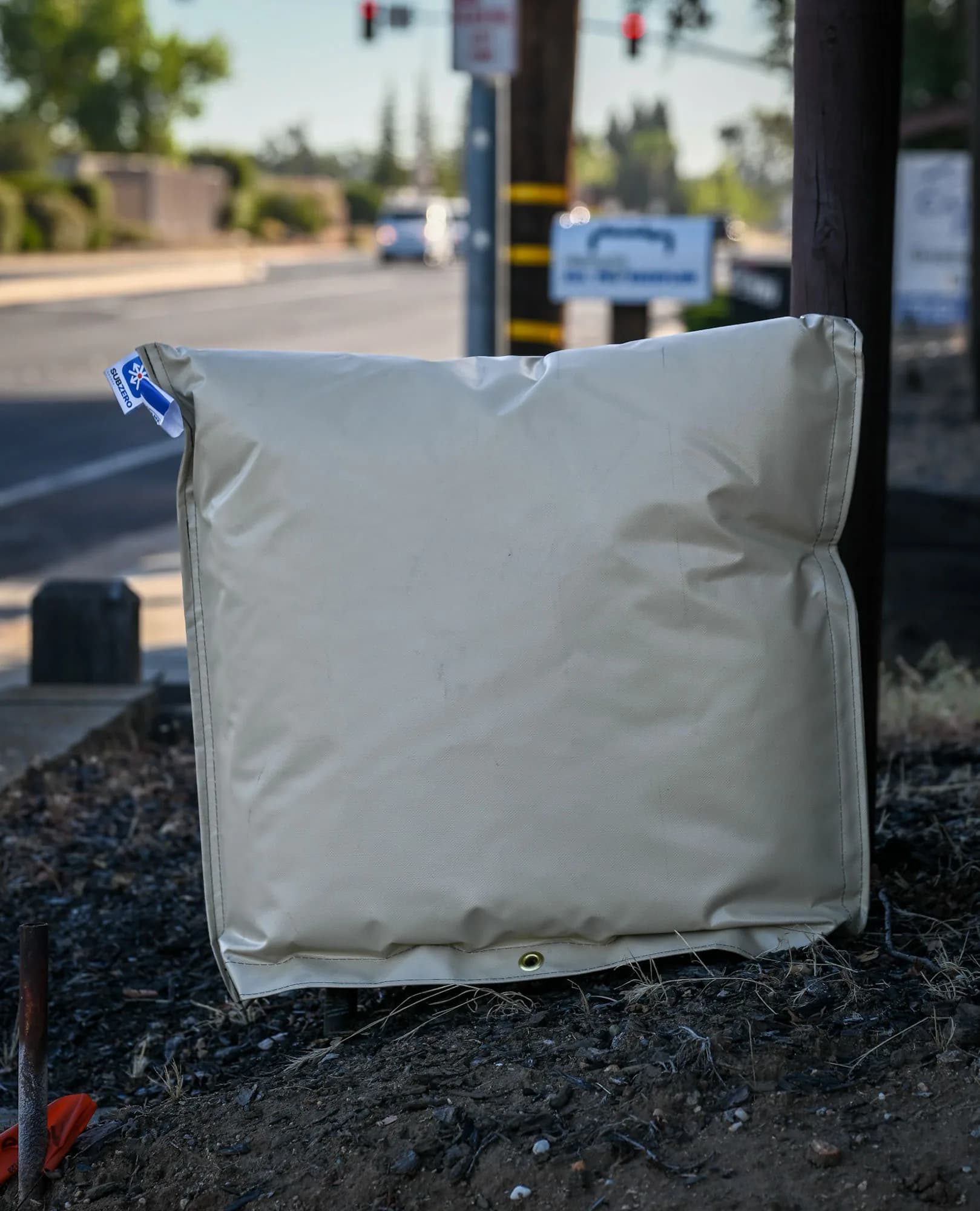
- Domestic and irrigation service under Fayetteville-style rules: an enclosure is required; the utility decides whether a prefabricated insulated cover qualifies as one. Ask, and get it in writing.
- Private assemblies not under a utility standard (secondary assemblies on the property side, irrigation zones downstream of the containment assembly): the state code's heat-or-insulation rule governs, and an insulated cover is a named method. This is where most cover volume in North Carolina actually sits.
Market notes
Charlotte, the Triangle, and the Triad all run large commercial fire-line programs, which is why fire protection distributors here see more DCDA and RPDA than most states. The irrigation market is substantial and mostly on the property side of the containment assembly. Both channels order through the distributor program.