
The state layer
Ohio EPA regulates backflow prevention and cross-connection control for public water systems under Ohio Administrative Code Chapter 3745-95, which requires each system to run a program, approves assembly models through the water supplier, and requires testing at installation and at least every twelve months. Rule 3745-95-06 also sets installation conditions of its own: assemblies must be "Protected from freezing. Any provided heated enclosures shall conform to ASSE 1060," and a reduced pressure assembly may not be "installed within a pit or vault below ground." The Ohio Plumbing Code (OAC 4101:3, administered by the Board of Building Standards) incorporates the 2021 International Plumbing Code, so Sections 608.15.1 and 608.15.2 apply unchanged: outdoor enclosures comply with ASSE 1060, and assemblies in freezing areas are removable by unions or protected from freezing by heat, insulation or both.
What the cities add
Akron's Water Supply Bureau standard construction drawing M-10.0, "Meter and Backflow Preventer Above Ground Heated Enclosure," is the city's installation detail. Hudson's engineering standards (Codified Ordinances Chapter 1419, §2.16) require a heated enclosure that complies with ASSE 1060 unless the assembly sits in a heated building, and name box-style enclosures by manufacturer. Other Ohio cities publish their own installation standards on top of the state rule, and heated enclosures are typical on fire service.
Ohio's design lows are cold enough that most domestic assemblies are installed indoors and most outdoor ones are on fire service or irrigation.
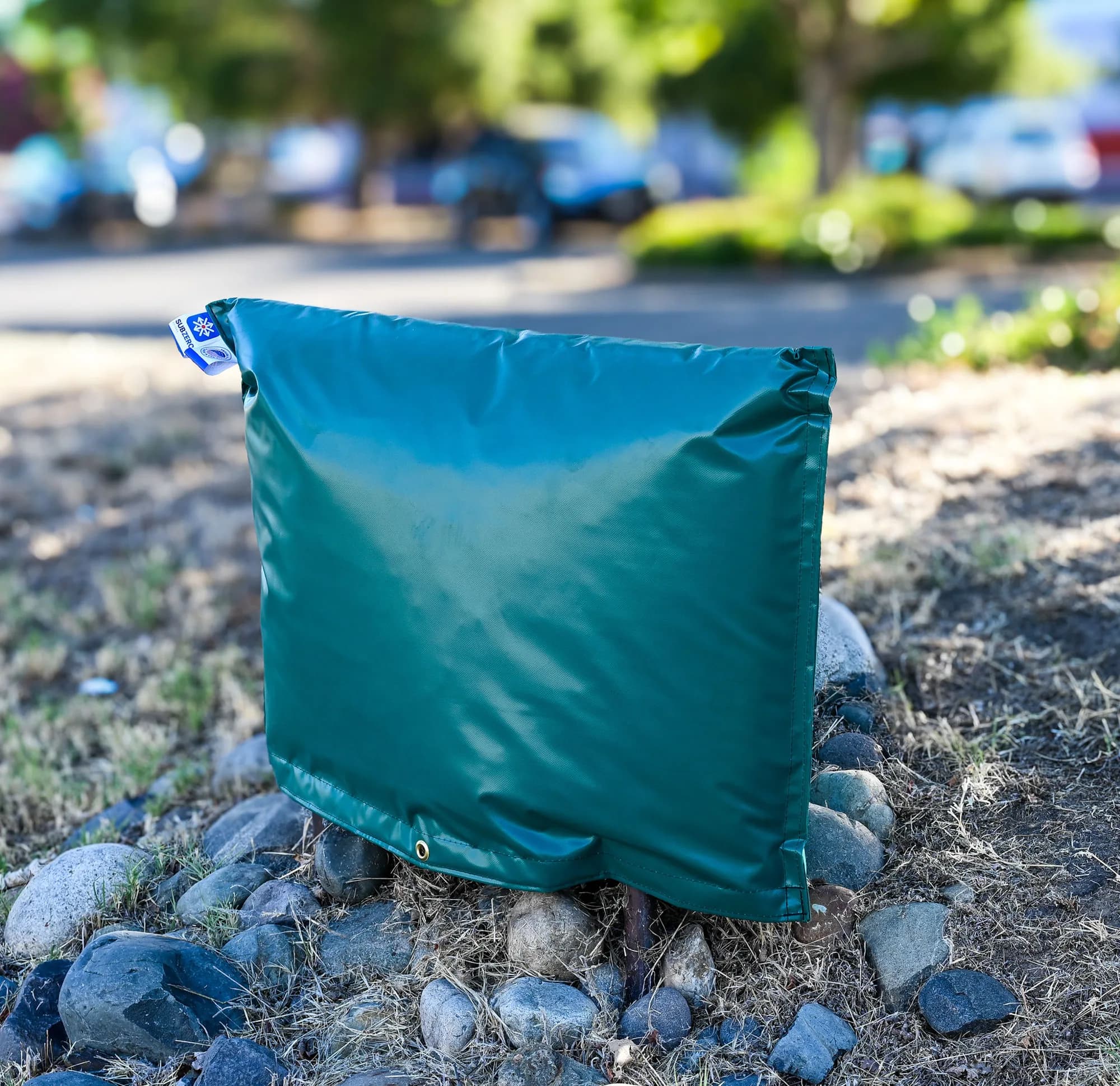
What this means for a cover
- Cities with a heated-enclosure detail (Akron and similar): the cover is the insulation layer inside the heated install, or the protection on private-side assemblies the detail does not govern.
- Outdoor domestic RPs elsewhere: insulation is a code-named method; on a flowing service it holds through much of the winter, but Ohio sees stretches cold enough that heat trace under the cover is the safer spec on idle assemblies.
- Irrigation: drained by October. The Watts 007 and PVB covers move in September and April.
- Fire lines: heated enclosures by fire-marshal expectation.
Market notes
Columbus, Cleveland, and Cincinnati carry the commercial and fire-protection volume; irrigation is a solid shoulder-season business statewide. Plumbing houses and fire protection distributors order through the distributor program. Illinois, next door with its own code, is on the Illinois page.