
The state layer
Texas regulates backflow through the Texas Commission on Environmental Quality. Two rules matter for freeze protection:
- 30 TAC §290.44(h) is the public water system rule: it requires backflow prevention at the meter for hazards, and it is why utilities run cross-connection programs at all.
- 30 TAC §344.50(b)(2) is the landscape irrigation rule. Where a health hazard exists, it allows a reduced pressure principle assembly only if it is installed at a minimum of 12 inches above ground in a location where it will not be submerged, and drainage is provided for water discharged through the relief valve. TCEQ reprints the rule in its cross-connection guidance, RG-478 (revised February 2026), Appendix G.
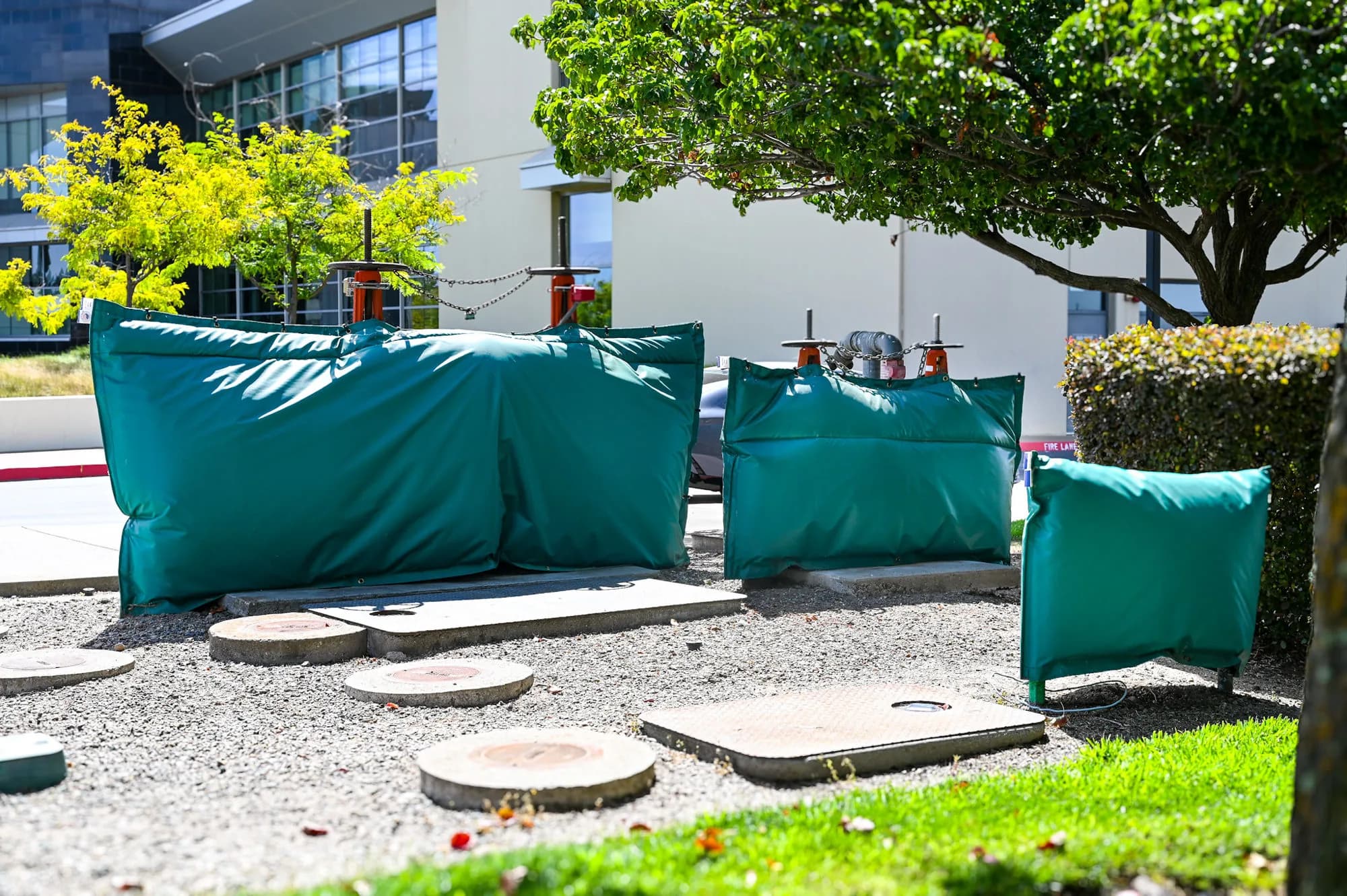
Neither rule tells you how to protect the assembly from cold. They tell you where it has to sit: above grade, in the open, with the relief port free to discharge. That is precisely the installation an insulated cover was made for, and precisely the installation that freezes first when nothing is on it.
What the cities add
Texas cities adopt a plumbing code, usually the IPC or UPC, and many write their own backflow ordinance on top. Three examples show the range:
City of Sherman (Code §3.07.001) requires backflow devices installed above flood stage, never below grade or in ground, and "protected from freezing conditions, by insulation, heat or both." That is the IPC's own language carried into local code, and insulation is one of the named methods.
San Antonio Water System's installation standards say RP assemblies will be installed above ground, recommend placing the unit at least 12 inches plus the pipe diameter above finished grade for repair clearance, and warn that "freezing can be a problem in this area and precautions should be taken to protect above ground installations." The City's Development Services bulletin IB 161 (revised November 2024) carries the same language.
City of Arlington, for premise isolation on commercial services, requires an above-ground installation in a freeze-protected enclosure meeting ASSE 1060. That is the stricter end: an insulated cover is not an ASSE 1060 enclosure and should not be quoted as one on an Arlington premise-isolation job.
What this means for a cover
- Irrigation RPs (30 TAC 344.50): above ground, relief valve draining. An insulated cover sized to the assembly fits the rule as long as the relief port is not sealed to the pad. See RP covers and the PVB page for the vacuum-breaker installs common on residential systems.
- Cities with "insulation, heat or both" language: a properly sized cover is a code-named method. Document the city and the section on the quote.
- Cities specifying an ASSE 1060 enclosure: sell the enclosure, or hand the customer to someone who does. A cover can still protect assemblies elsewhere on the same property that are not under the premise-isolation rule.
Why Texas buyers stock early
The last four hard freezes were February 2021 (Winter Storm Uri, the costliest winter storm in Texas history), January 2024, January 2025, and late January 2026. Each one produced the same pattern: a week of forecasts, then a two-day run on anything insulated, then months of RP rebuilds. Distributors who stock before October sell through; distributors who order during the forecast ship after the thaw.
Irrigation supply branches in DFW, Austin, San Antonio, and Houston carry the most PVB and small RP exposure. Plumbing and PHCP houses see the commercial RPs. Both are served through the distributor program.