
The state layer
Nevada's drinking water rules handle backflow through NAC 445A.67185, which incorporates the Uniform Plumbing Code (2021 edition), AWWA Manual M14 (fourth edition), and the USC Manual of Cross-Connection Control (tenth edition) by reference and provides that "the most stringent of those provisions prevails." That gives every Nevada purveyor the UPC's cold-climate provision (an ASSE 1060 enclosure or a method acceptable to the AHJ) plus the two national manuals' installation guidance: above ground, accessible, protected from freezing and flooding.
What the purveyors add
Las Vegas Valley Water District installs and retrofits assemblies above ground, and the enclosure industry reports a district program to move remaining vault installations above grade; LVVWD's own published rules do not describe that program, so confirm with the district before citing it to a customer. Above-ground assemblies in the valley face theft more than frost, but the valley does freeze a few nights most winters, and an exposed brass RP on a dark night is the classic loss.
Reno, Sparks, Carson City, and the rural north see real winters. Truckee Meadows Water Authority defines freeze protection as an enclosure "designed with sufficient insulation and heat," requires RPs above ground in a freeze-proof enclosure, and puts fire-service RPs in a heated enclosure just inside the curb.
What this means for a cover
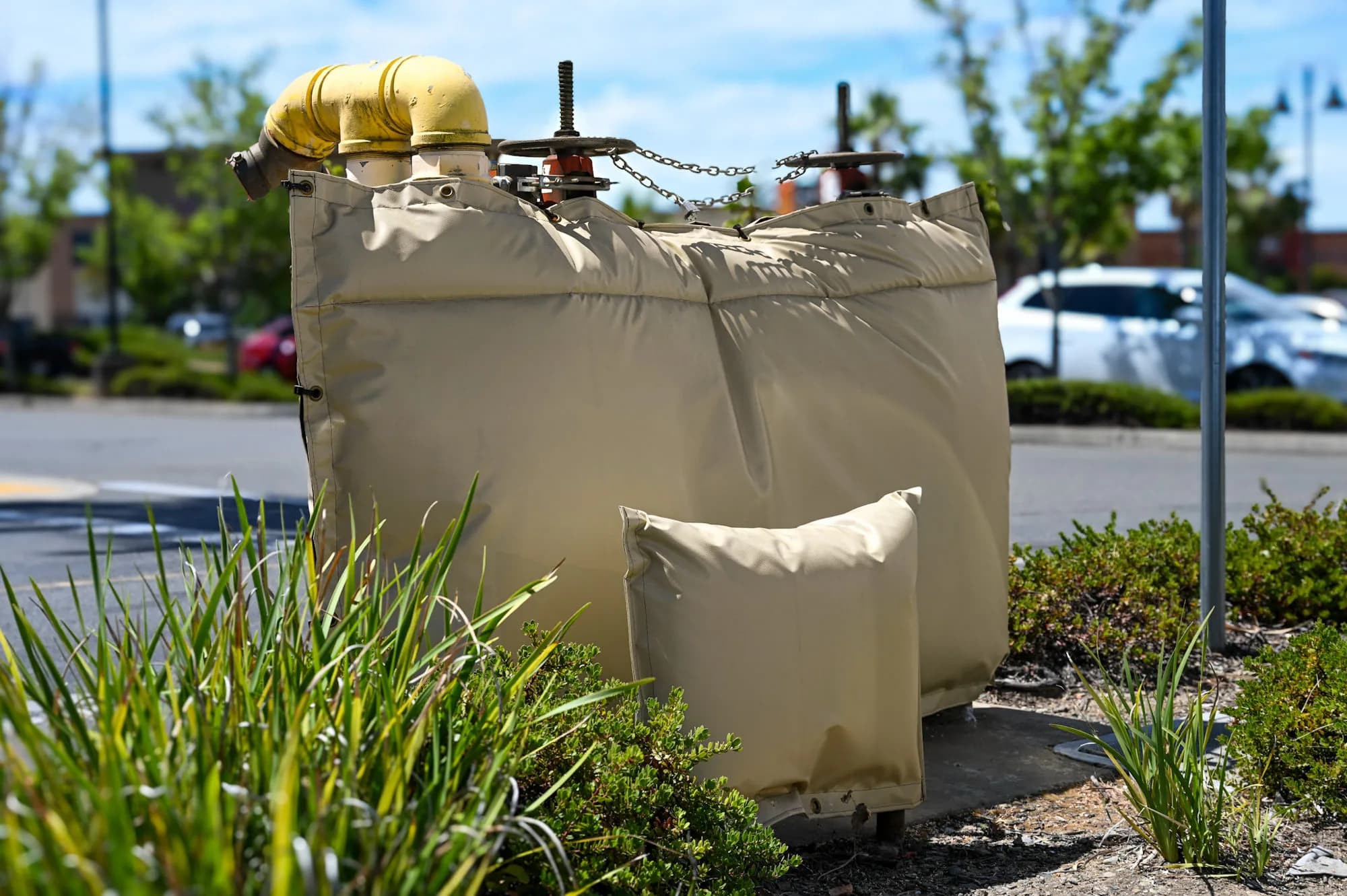
- Southern Nevada: an insulated cover is the practical freeze answer for the handful of cold nights, and a padlock through the grommets makes a covered assembly a less obvious theft target than bare brass. Confirm with the purveyor for containment assemblies.
- Northern Nevada: expect an enclosure with insulation and heat on utility-regulated RPs and on fire lines; insulation alone is a private-side and irrigation answer. Ask the purveyor.
- Large RPs coming out of vaults: the Watts 957, Ames Colt C400, and Zurn 375 are the usual replacements; each has a model page with the envelope.
Market notes
Las Vegas is a very large commercial market with the assemblies increasingly above grade; Reno is smaller and colder. Both order through plumbing houses and backflow testers via the distributor program. See Utah and Arizona for the neighbors.