
The state layer
Oklahoma adopted the International Plumbing Code as the statewide minimum commercial plumbing code through the Oklahoma Uniform Building Code Commission (OAC 748:20-16). The 2018 edition is in force until September 14, 2026, when the 2024 edition takes effect; in both, the provisions that matter sit at 608.15.1 (outdoor enclosures for backflow devices comply with ASSE 1060) and 608.15.2 (backflow preventers in areas subject to freezing are removable by unions or protected from freezing by heat, insulation or both). The 2015 edition numbered them 608.14.1 and 608.14.2.
Oklahoma DEQ's public water supply construction standards (OAC 252:626-5-15) prohibit cross connections and say "do not locate backflow prevention devices in a pit or vault where they can become submerged." Tulsa publishes its own backflow installation standard (Standard 841), a drawing that specifies a stainless enclosure with thermostatic heat cable and half-inch foam insulation; Oklahoma City and Norman run their own programs, and Norman announced a new cross-connection control program in 2025.
What the cities add
Most Oklahoma city standards follow the IPC's language and require above-ground installation of RPs with the relief valve draining. Where a city drawing specifies heat, as Tulsa's does, it specifies insulation with it. Confirm with the city's backflow program office; the standards differ in detail.
The Oklahoma complication: ice
Oklahoma's damaging winter events are ice storms and arctic outbreaks that arrive together: the October 2020 ice storm, February 2021, and the January 2026 winter storm that brought sleet, freezing rain, and extreme cold at once. Ice storms take down power lines, and a Class I heated enclosure without power is an insulated box. That is the argument for insulation as the base layer on every outdoor assembly, with heat as an addition rather than a substitute, and for draining anything that can be drained before the event. Our how cold, how long guide covers the no-power case.
What this means for a cover
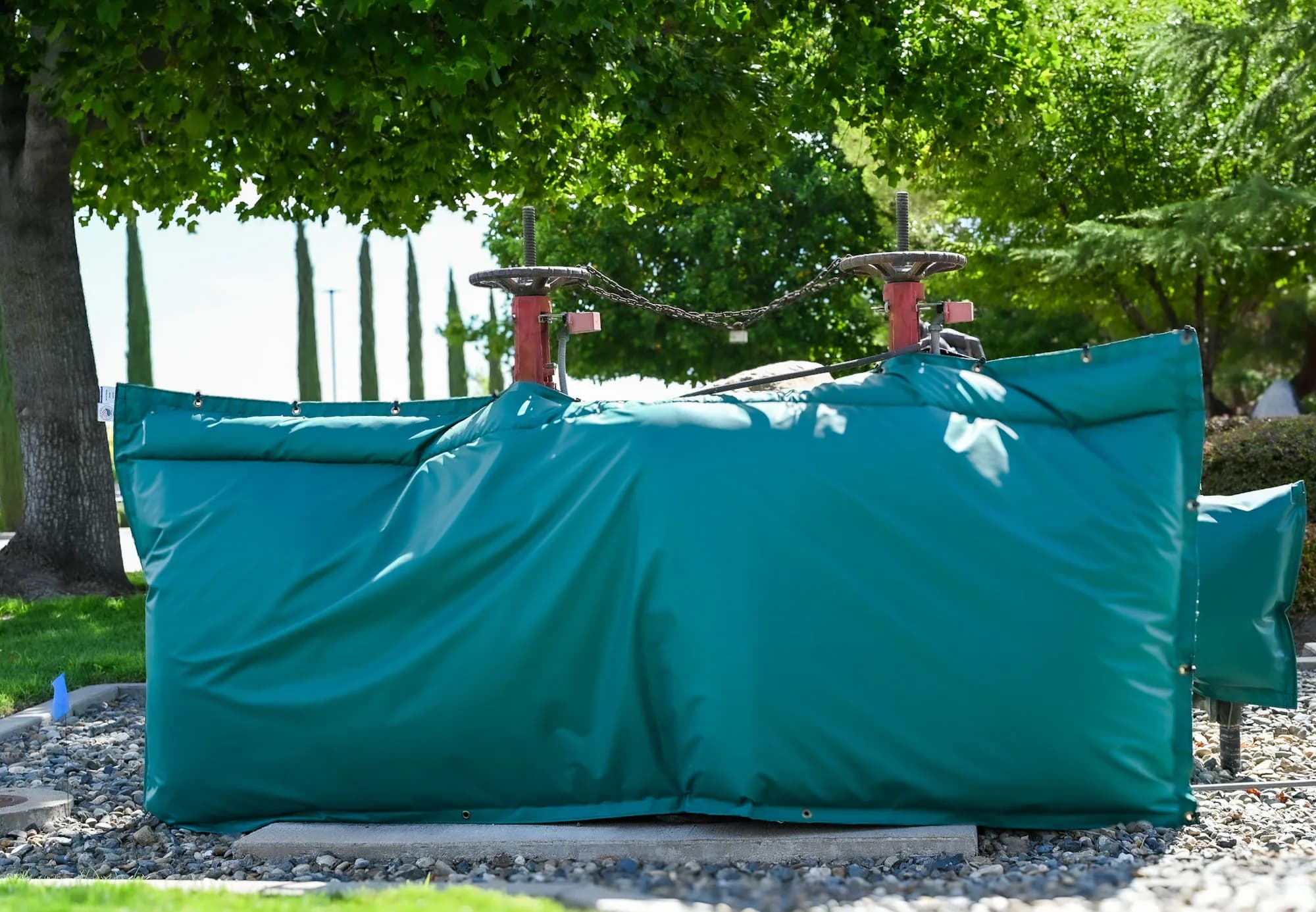
- Domestic and commercial RPs: insulation is a code-named method; a fitted cover on a flowing service carries most Oklahoma winters. See RP covers.
- Fire lines: heat where the city standard or the fire marshal requires it, with the cover as the insulation layer that keeps working when the power fails.
- Irrigation: drained by November; the cover is for the shoulder seasons and the surprise first freeze.
Market notes
Oklahoma City and Tulsa carry the commercial volume through plumbing houses; irrigation is smaller than in Texas but real. Both order through the distributor program. Texas rules and the shared freeze history are on the Texas page.