
The state layer
Oregon Health Authority's drinking water rules put installation requirements directly in administrative rule. OAR 333-061-0071(7) (last amended effective January 1, 2025) requires that reduced pressure assemblies (RP and RPDA):
- be installed above the 100-year (1 percent) flood level unless the local authority having jurisdiction approves otherwise,
- be protected from freezing when necessary,
- not be installed in an enclosed vault or box unless it has a bore-sighted drain to daylight sized to carry the relief valve's full discharge, and
- not be installed higher than five feet without a permanently installed platform meeting OR-OSHA standards.
Oregon is a UPC state: the 2023 Oregon Plumbing Specialty Code, effective October 1, 2023, is based on the 2021 Uniform Plumbing Code. UPC §603.4.7 says that in cold climate areas assemblies "shall be protected from freezing with an outdoor enclosure that complies with ASSE 1060 or by a method acceptable to the Authority Having Jurisdiction," so the state rule's "protected from freezing when necessary" is read alongside that AHJ discretion.
What Portland adds
Portland Water Bureau's installation requirements are the most specific in the state:
- Only commercially manufactured, prefabricated, insulated outdoor enclosures will be approved. Site-built boxes and improvised wraps are out.
- Above-ground enclosures sit on a concrete pad at least 4 inches thick.
- All exposed piping inside the enclosure must be insulated with commercially manufactured closed-cell pipe insulation, or a heat source must be provided.
- Clearances for assemblies larger than 2 inches: 12 inches under the lowest part of the body or relief valve, 24 inches in front and above, 4 inches at the back and ends. Assemblies 2 inches and smaller need 4 inches all round. An enclosure may sit tighter if its panels, doors, and top remove to give the same clearance.
The phrase "commercially manufactured, prefabricated, insulated" is written for rigid enclosures, but it does not say rigid, and it does not say ASSE 1060. Whether a factory-made insulated cover on a pad qualifies is a question for the Bureau's cross-connection staff. Get the answer before you quote.
What this means for a cover
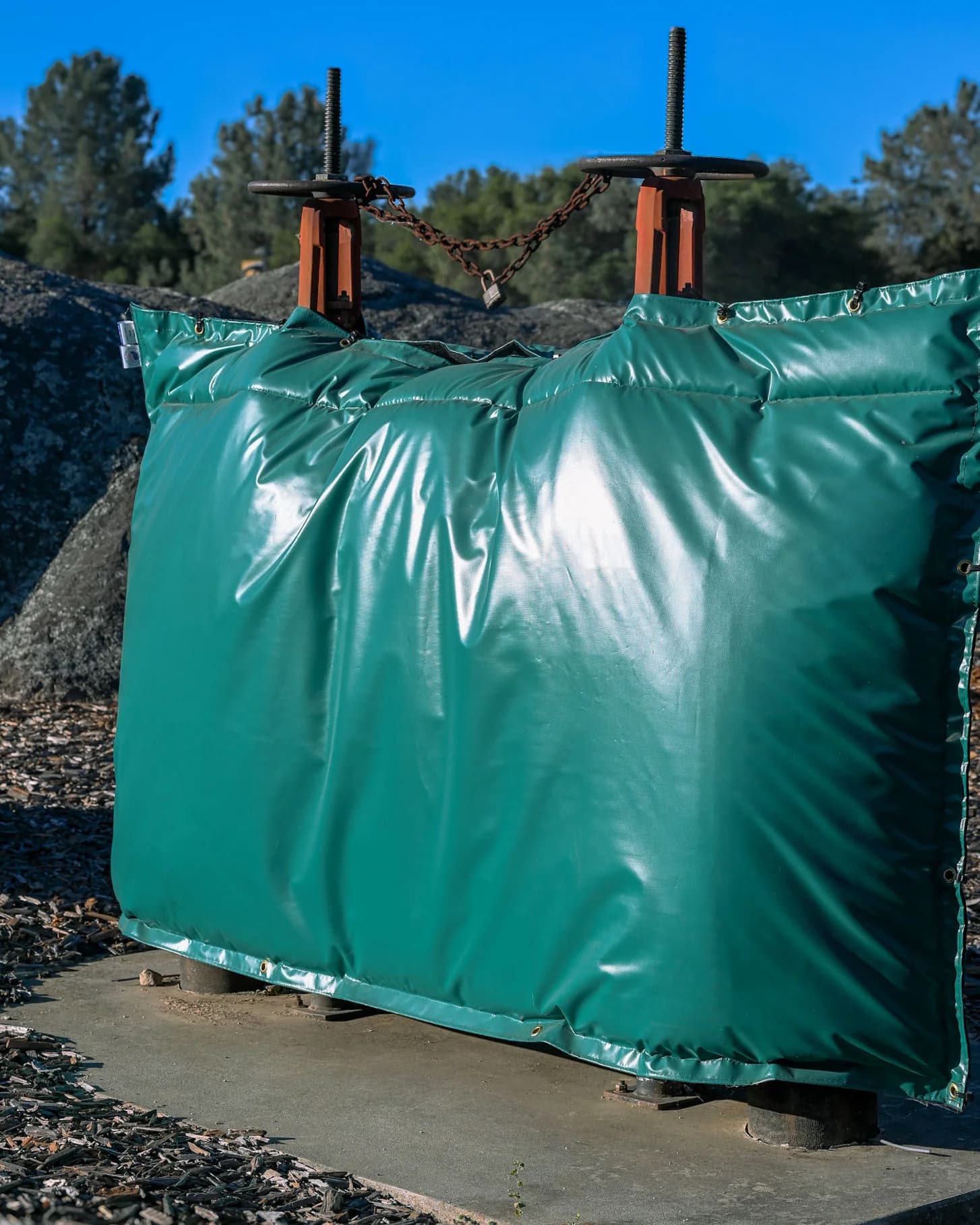
- Portland utility-regulated assemblies: ask the Bureau. If accepted, the cover must be factory-made (ours are), sized to the assembly, and installed with the relief port draining and the exposed piping insulated.
- Other Oregon systems: the state rule requires freeze protection "when necessary." Most systems accept insulation as a method under the UPC's AHJ clause; confirm locally.
- Irrigation and private-side assemblies: the Willamette Valley irrigation market is large and mostly on ¾" to 1½" DCs and RPs. See DCV covers and RP covers.
Market notes
Portland-metro plumbing and irrigation supply houses see the bulk of the volume, with a secondary market in Bend and the Rogue Valley where winter lows run colder than the coast. Both order through the distributor program.